
The Fish River Canyon cuts a dramatic gash in the earth and is one of the most
breathtaking sights next to the Grand Canyon. As the first light touches the canyon
walls, and the descent begins. With every step, the quietness and tranquility make one
forget about the hustle and bustle of everyday life. At the bottom of the canyon, the walls are the only companions one will see for the next few days.
In southwestern Namibia lies the Fish River Canyon, the longest river in Namibia and
second only to the Grand Canyon. This is reason enough to add the Fish River to the
itinerary. From the viewpoint, this canyon takes one’s breath away. It is 800 kilometers
long and its source lies in the eastern parts of the Naukluft Mountains. Unfortunately,
this river is not perennial and only carries water during the rainy season.
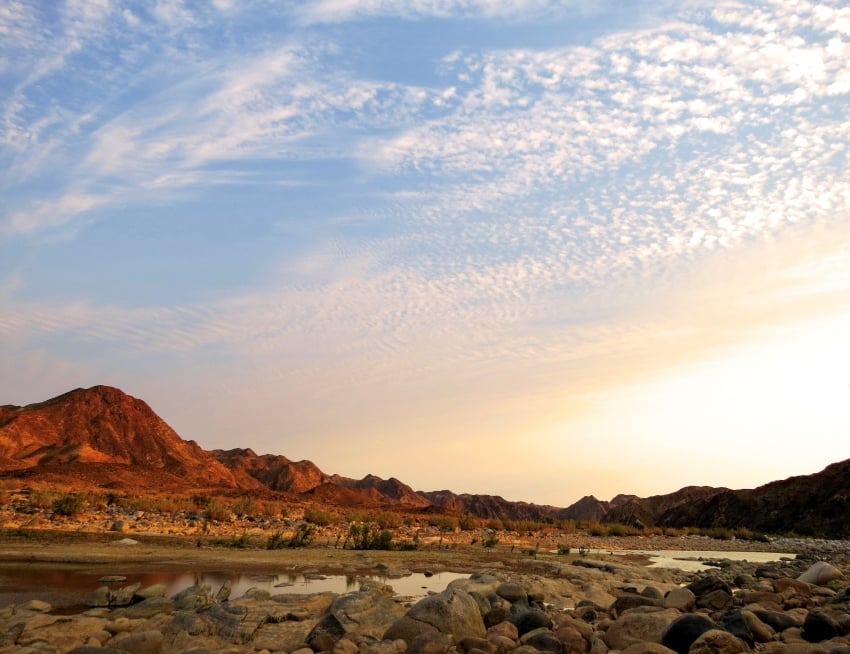
Photo credits: Janke Murray
During the dry season, the canyon is popular among hikers and trail runners. In the Fish
River Canyon Ultra Marathon trail runners take on the 90 kilometers and try to break the
record of 6 hours 39 minutes. The trail starts 13 kilometers from Hobas. The descent is
steep, and chains are provided. Make no mistake the two kilometer descent challenges
hikers from the beginning of the journey. Once the bottom of the canyon is reached,
hikers will pass through a narrow section, layered with big boulders until the Sulphur
Springs or Palm Springs are reached. From the Sulphur Springs the trail leads to Three
Sisters where the route is on firmer ground. There are also a few shortcut paths that can
be taken when hiking the river. The hiking route is not only spectacular but also has a bit
of history tucked away between the canyon walls. Hikers can take the shortcut route to
pass by the German soldier’s grave who was buried in this desolate area.
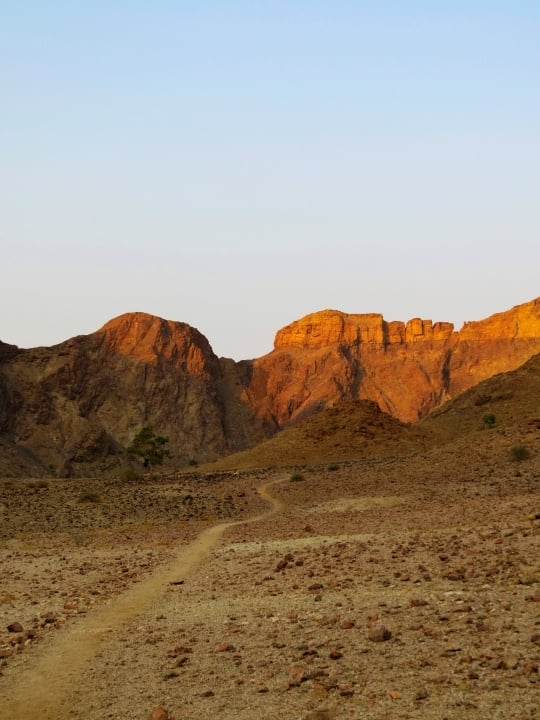 Photo credits: Janke Murray
At the end of the 90 km hike, hikers and runners can rest at the hot spring resort, Ai-/Ais.
For those who do not want to undertake the hike, can also stay at the resort and relax in
the 40-60°C water while enjoying a nice cold beer. According to the legend, the springs
were discovered in 1850 by a nomadic Nama shepherd rounding up a stray sheep. The
springs served as a base for the German military during the Nama uprising in 1903-
1907. In 1915 the area was also used by South African troops. Today, the sulphurous
thermal hot water springs form part of the /Ai-/Ais Richtersveld Transfrontier Park and
the springs have been a national monument since 1964.
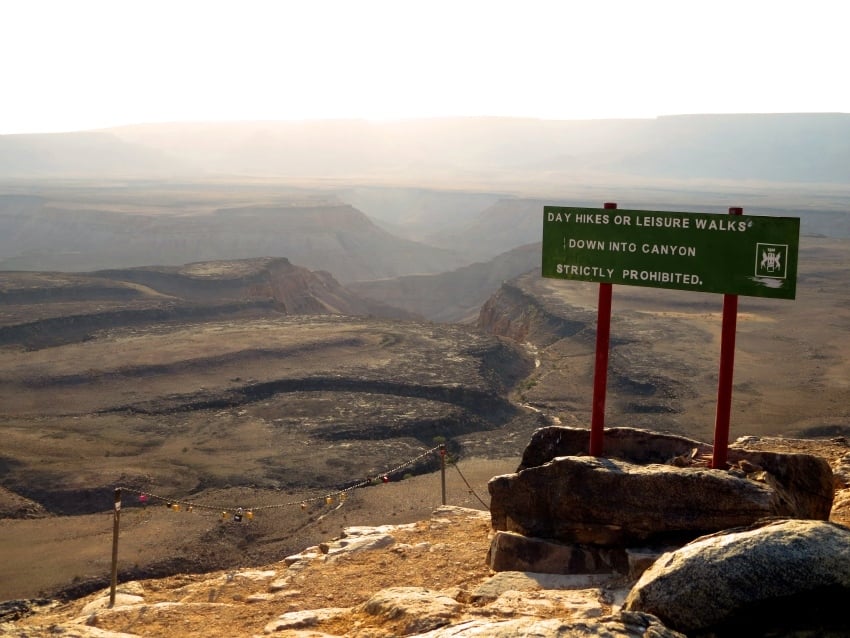
Photo credits: Janke Murray
Not only is the Fish River a hiker’s paradise, but the geology is also fascinating. The
canyon consists of an upper and lower section. The watercourse has cut a channel into
the stony Great Namaqualand plateau creating a stunning view. However, the best time
to observe the canyon is at sunrise or sunset when the sun reflects brilliantly against the
canyon walls.
Whether you want to hike, run or simply just relax while enjoying the impressive sight of
the second largest canyon in the world, the Fish River Canyon is a must for every travel
itinerary
.png?width=203&height=146&name=GTC%20LOGO-01%20(1).png "GTC LOGO-01 (1)")
SUBMIT YOUR COMMENT