
A stony valley filled with little vegetation and few mountains in the distance is all that I
can see. The sun is burning down relentlessly, and it feels like all hope is lost. Then
suddenly there is a big crack in the barren plateau. And there is a speck of hope in the
Namib Desert! We are descending into a large river, and the few trees and grass signal
the possibility of underground water. There is a strange beauty about this desert. It
seems impossible to live here, but Henno Martin and his friend are proof that one should never underestimate the desert and God’s grace.
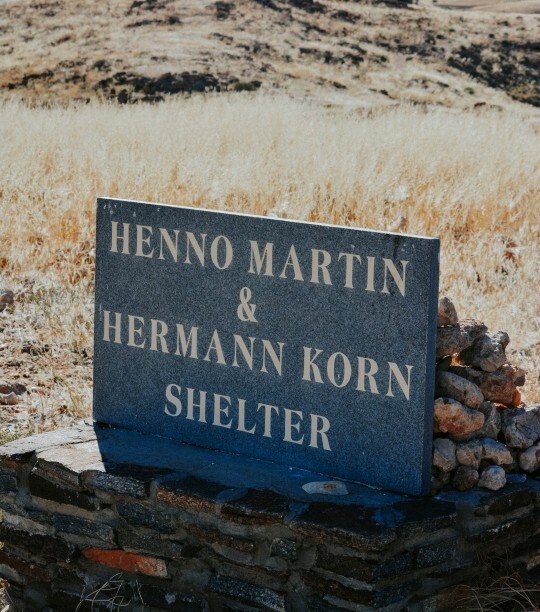 Photo credits: Janke Murray
Namibia is most definitely not Hollywood, but it produced a few storylines for award
winning movies over the years! One such movie is The Sheltering Desert. It is 1939 and
the rumors of war have came true. With the rising conflict, Namibia which was a
German colony at the time, was no longer a safe place. Because of the South African
and German ties to South West Africa, the South African government feared that the
German residents and Nazi agents in Namibia could establish illicit communication
networks or provide logistical support to German U-boats. At the time detaining
German nationals was considered necessary to secure the dominion’s borders and
prevent internal uprisings.
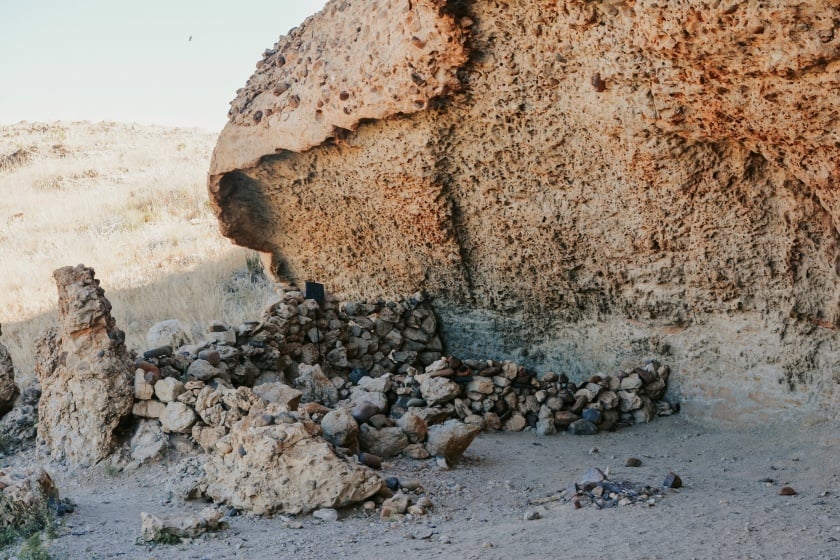
Photo credits: Janke Murray
To escape the internment by the South African Mandatory Government, geologists
Henno Martin and Herman Korn sought shelter in the Namib Desert in 1940. It started
with two cars, an air rifle, one pistol and the merciless desert. The desert became their
home for the next two and a half years. Their first shelter was on the edge of the Kuiseb
River under an overhanging rock, called Karpfenkliff. Despite being in the desert, the
Kuiseb River had water pools full of fish which became their source of food and water.
During these two and a half years the two men had three shelters. These shelters
provided shade and protection against strong winds and wild animals. The large flat
plateau above the canyon was perfect for hunting as the mountain zebras, oryx,
springboks and ostriches moved daily between the canyon and the plateau. In
September 1942, Hermann Korn fell ill with beri-beri, due to malnutrition. Getting a
well-balanced diet in the desert was scarce.
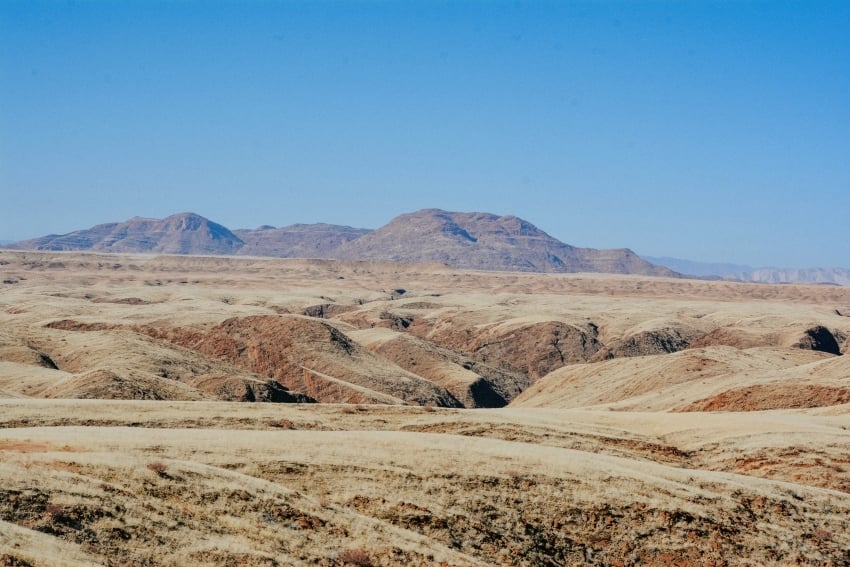
Photo credits: Janke Murray
They were forced to seek medical treatment, and they decided to take the risk and go to
Windhoek. They were not interned upon their arrival and before the war ended, they
were employed as surveyors by the government. Martin was a geologist and worked on
water-exploration projects after the war, providing many farms with water. He was part
of a group of scientists who had obtained evidence of the former connection between
Africa and South America. His first great achievement was on the research he did on the
Naukluft nappe complex that provided evidence of gravitational nappe transport.
Today, the overhanging rock that provided shelter to Martin and Korn is protected by the
Namib Naukluft Park and a place one can visit. Namibia is much more than just another
country to travel, its stories like this that differentiate it from all the popular tourism
spots.
Author: Janke Murray
.png?width=203&height=146&name=GTC%20LOGO-01%20(1).png "GTC LOGO-01 (1)")
SUBMIT YOUR COMMENT